Why You Shouldn’t Use Moth Balls + Safe Alternatives
For generations, the pungent, unmistakable smell of mothballs was a staple of seasonal wardrobe changes.
Tucking those little white spheres into trunks and closets was the standard way to protect wool sweaters and expensive suits from hungry moth larvae.
However, as modern science has pulled back the curtain on the chemicals inside these traditional deterrents, we now know that keeping them in your home poses serious health and safety risks.
Fortunately, you don’t have to sacrifice your fabrics to protect your health—there are highly effective, completely safe alternatives available.
In this post, we will explore why you shouldn’t use mothballs, and some safer alternatives.
Let’s dive in!
Why You Shouldn’t Use Mothballs
Traditional mothballs are not just simple deodorizers; they are registered chemical pesticides designed to release toxic vapors.
The primary reasons you should banish mothballs from your home include:
- Toxic Chemical Composition: Most modern mothballs are made of either Naphthalene or Paradichlorobenzene (PDB). Both are volatile organic compounds (VOCs) that transform directly from a solid into a toxic gas, which permeates the air you breathe.
- Carcinogenic and Neurological Risks: Prolonged inhalation of these chemical vapors has been linked to headaches, dizziness, nausea, and liver damage. The World Health Organization (WHO) classifies naphthalene as a potential human carcinogen.
- Extreme Danger to Pets and Children: Because mothballs look like candy or small toys, they are a major ingestion hazard for curious children and pets. Ingesting even a single mothball can cause severe poisoning, acute anemia, and kidney failure in a dog or cat.
- Persistent Odor Contamination: The chemical gases bond deeply to natural fibers. Once a garment absorbs the smell of mothballs, it can take months of washing, airing out, and specialized treatments to completely eradicate the toxic scent.
5 Safe and Natural Alternatives to Mothballs
Transitioning away from chemicals doesn’t mean giving your closet over to the pests. You can protect your clothes naturally by disrupting the pests’ life cycle and utilizing botanical deterrents.
1. Cedar and Lavender Sachets
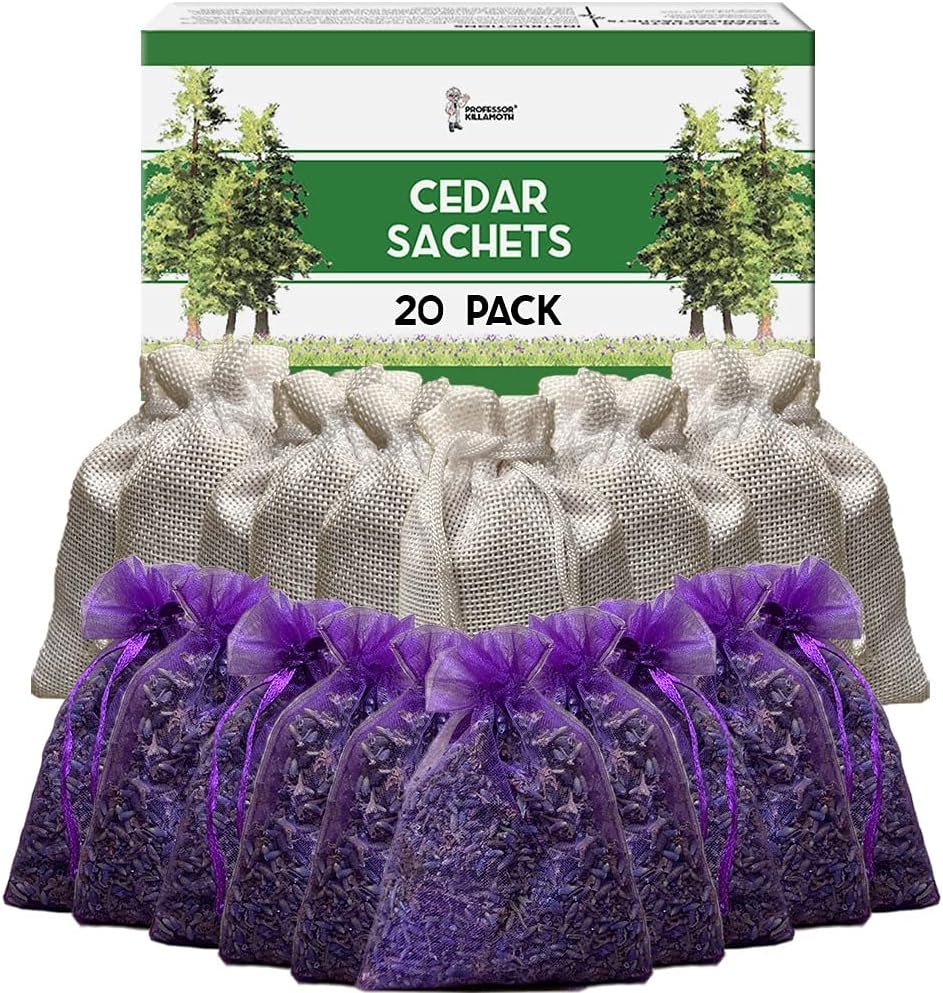
The absolute best natural replacement for traditional chemical repellents is a combination of Cedar and Lavender Sachets.
Clothes moths have a highly sensitive sense of smell, and the natural aromatic oils found in red cedar wood and dried lavender flowers act as powerful, natural deterrents.
The volatile oils in cedar physically disrupt the behavior of young moth larvae, preventing them from feeding on your fabrics, while lavender safely repels adult moths looking for a place to lay eggs.
Simply tuck these natural sachets into your dresser drawers or hang them on your closet racks for a fresh, clean scent that keeps pests at bay without a drop of pesticide.
Out of all of the sachets I’ve tried, I absolutely love these cedar and lavender sachets.
Unlike these toxic pesticides, which can cause respiratory irritation and neurological risks, these sachets rely entirely on the natural aromatic power of pure lavender to safely repel adult moths.
They keep your closets, drawers, and seasonal storage completely pest-free while infusing your fabrics with a beautifully fresh, soothing botanical scent instead of a stubborn chemical odor.
Simply add them in your closets and drawers and you’re good to go!
2. Clothes Moth Traps
If you suspect you already have an active infestation, you need to stop the breeding cycle immediately.
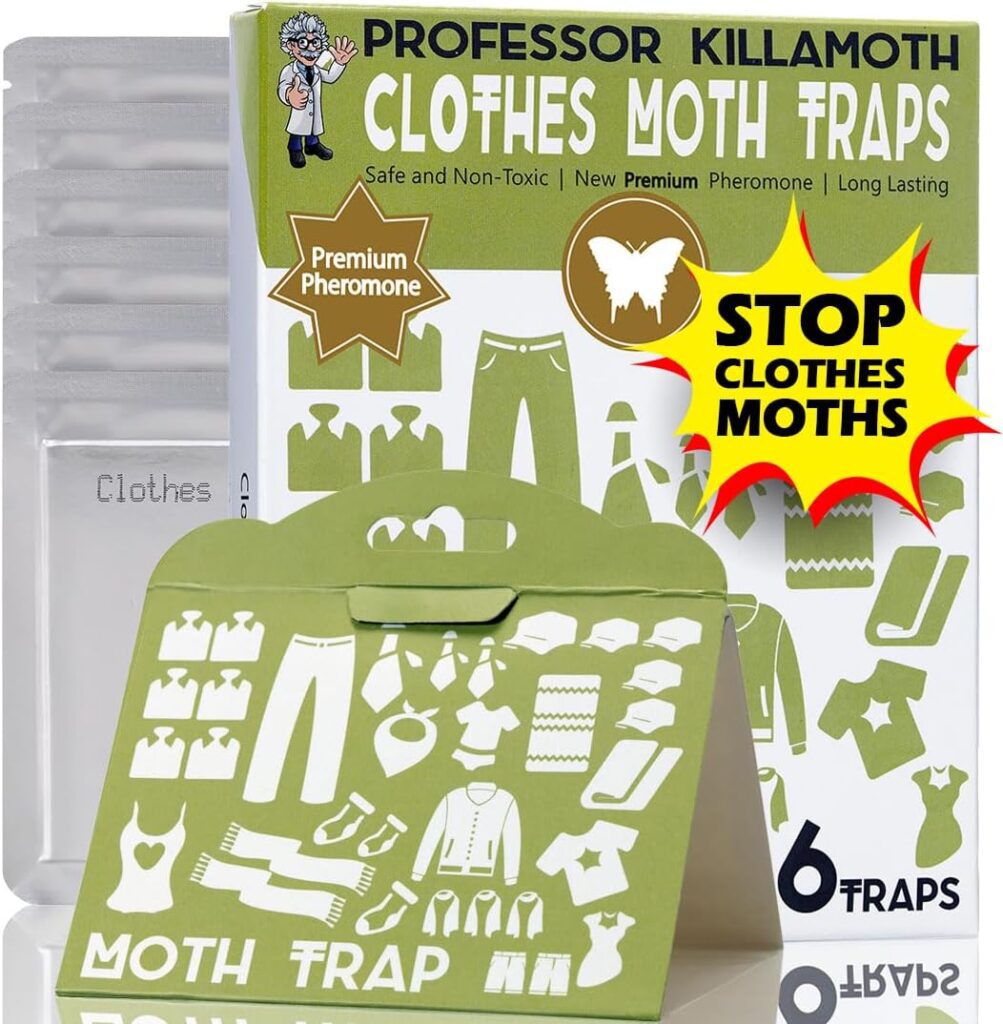
Clothes Moth Traps are a highly effective, completely non-toxic solution.
These traps utilize a natural female moth pheromone embedded on a sticky strip inside a small cardboard tent.
Male moths are irresistibly drawn to the scent, fly inside, and become securely trapped, immediately halting their ability to reproduce.
Placing a few of these discreet pheromone traps on your closet shelves allows you to safely monitor and eliminate the population without releasing harmful gases into your bedroom air.
Out of all of the clothes moth traps I’ve tried, these are my favorite clothes moth traps as they’re a powerful non-toxic solution that handles the problem rather than masking it with dangerous fumes.,
While traditional mothballs and camphor balls present a severe poisoning hazard to curious toddlers and pets, our traps are completely safe to use anywhere in your home.
They utilize an advanced, natural female pheromone to attract and securely trap male moths, instantly disrupting their breeding cycle.
This gives you a highly effective way to monitor and stop active infestations before they damage your expensive clothing, all without releasing harmful pesticides into your bedroom air.
Simply set one up and you’re good to go!
3. Proper Garment Laundering Before Storage
Moth larvae don’t actually eat wool for the fabric itself; they are hunting for the organic proteins, sweat, body oils, and food particles trapped within the fibers.
Before packing your winter clothes away, wash or dry-clean every single piece.
High heat during laundering or the chemical process of dry cleaning kills any invisible moth eggs or tiny larvae lurking in the seams.
Storing only perfectly clean garments removes the primary food source that attracts the pests in the first place.
4. Airtight Vacuum Storage Bags
Moths cannot chew through plastic. The most effective physical barrier you can use is an airtight, vacuum-sealed storage bag.
After thoroughly laundering your clothing, place the items inside the bag and use a vacuum to seal out all the air.
This not only saves an immense amount of closet space but also completely seals your fabrics away from adult moths looking for a dark, quiet place to nest.
5. Regular Closet Airing and Vacuuming
Clothes moths thrive in dark, undisturbed, and dusty corners. To make your home uninviting to them, practice regular closet maintenance.
Once or twice a year, pull your clothes out, shake them vigorously, and thoroughly vacuum the baseboards, carpet edges, and dark shelves of your wardrobe.
The physical vibration and exposure to bright sunlight instantly disrupt active moths, and vacuuming removes the dust, hair, and fibers that hidden larvae use to construct their cocoons.
Protect Your Wardrobe
Protecting your precious wardrobe from pest damage doesn’t require filling your home with dangerous chemical fumes.
By switching to botanical deterrents like cedar and lavender, and deploying non-toxic pheromone traps, you can maintain a beautifully fresh, safe, and entirely moth-free closet.
Thank you for reading, and here is to a healthy, naturally protected home!
Affiliate Disclosure
Some of the links on this site are affiliate links. This means that if you click on the link and purchase the item, we may receive an affiliate commission at no extra cost to you. I only recommend products or services that I believe will add value to my readers, however some (not all) do pay us to be on this blog. Your support and theirs helps keep this blog running, and I genuinely appreciate it.
Medical Disclaimer
The information provided on this website is for educational purposes only and is not intended as medical advice. This blog or the writer is not a licensed healthcare professional, and the content should not be used as a substitute for professional medical diagnosis, treatment, or advice. Always consult with your physician or other qualified healthcare provider before starting any new treatment or making any changes to your healthcare routine.