
5 Ways to Ease Skunk Odors in Your Home: What Causes Skunk Smells in the House?
Waking up to the pungent, oily, and overwhelming stench of a skunk inside your home is a true sensory emergency.
Whether your curious dog got sprayed and ran through the living room, or a skunk took up residence under your porch and released its defense mechanism, the smell is notoriously difficult to dislodge.
It doesn’t just sit in the air; it bonds to walls, fabrics, and even your own hair.
To reclaim your home, you have to look beyond standard candles and air fresheners and use a strategy that addresses the sulfur-based chemistry of the spray.
What Causes Skunk Smells in the House?
The reason a skunk’s spray is so powerful and persistent is due to its complex chemical makeup. It isn’t just a “bad smell”: it’s a sophisticated biological defense.
The primary culprits behind the lingering stench include:
- Thiols (Thioalcohols): These are the organic sulfur compounds responsible for the immediate, sharp “rotten egg” smell. The human nose is evolved to detect thiols in incredibly small concentrations (parts per billion).
- Thioacetates: These are “dormant” versions of thiols. When they get wet—such as when you try to wash your dog or when the humidity rises—they convert back into pungent thiols. This is why the smell often “returns” just when you think it’s gone.
- Oily Secretions: Skunk spray is an oil-based yellow liquid. Because it is oily, it doesn’t just evaporate; it sticks to surfaces and repels water, making it nearly impossible to “wash away” with traditional soap.
- Airborne Volatility: The spray atomizes into a fine mist that can travel through HVAC systems, settling into carpets, curtains, and upholstery throughout the entire house.
5 Ways to Ease Skunk Smell in the House
To eliminate the smell, you must neutralize the sulfur molecules and strip the oily residue from every surface it touched.
1. Animal Odor Eliminator
The most effective way to tackle a skunk emergency is with a professional-grade Animal Odor Eliminator.
Unlike a typical room spray that masks the scent with perfume, a true odor eliminator uses specialized technology (often involving activated minerals or enzymes) to physically trap or break down the sulfur compounds.
These products are designed to reach deep into the “dead air” spaces where skunk spray lingers, like wall cavities, attics, and crawlspaces.
By placing a high-capacity eliminator pouch or using a specialized spray near the entry point, you can pull the thiol molecules out of the air before they can bond permanently to your furniture.
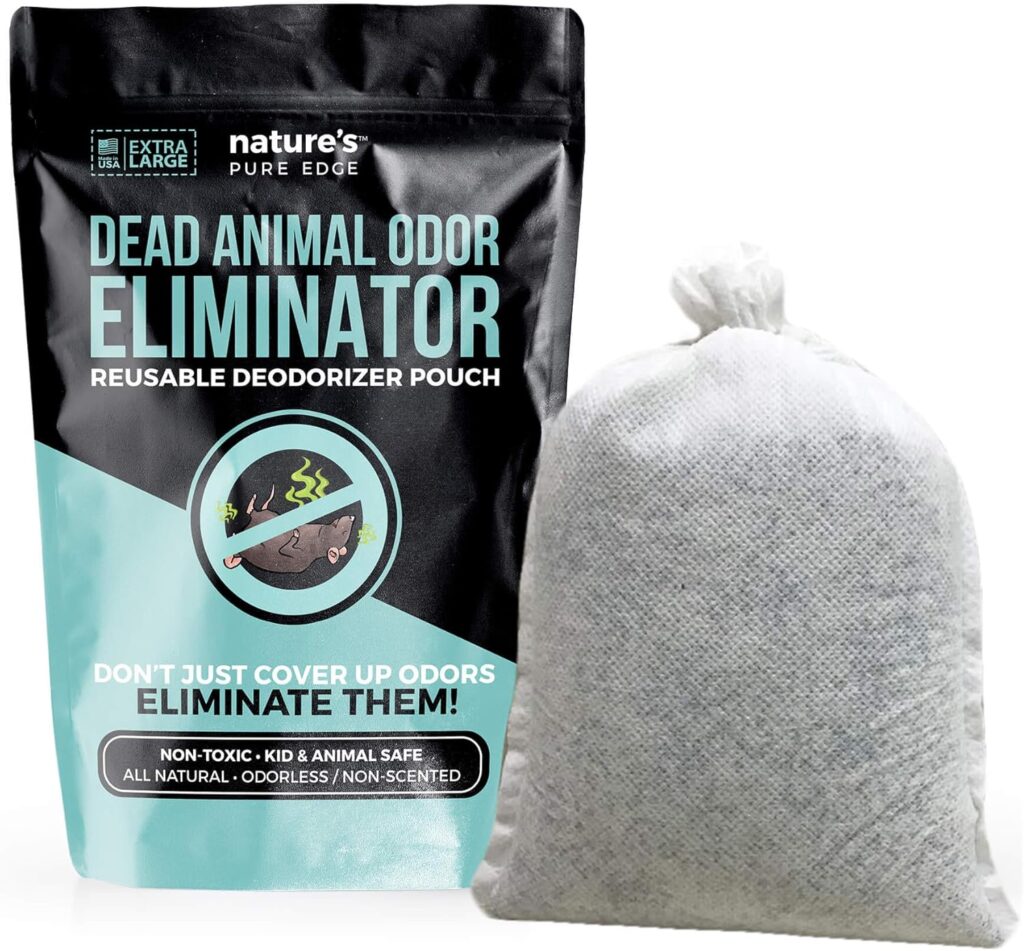
Out of all of the odor eliminator pouches I’ve tried, my personal favorite is Nature’s Pure Edge Dead Animal Odor Eliminator.
These pouches are specifically engineered to tackle the intense sulfur-based thiols found in skunk spray by trapping them within a specialized crystalline mineral structure.
Covering up to 375 square feet, these non-toxic pouches are the ideal “set-it-and-forget-it” solution for neutralizing lingering odors in difficult-to-reach areas like crawlspaces, attics, and wall cavities.
Because they are fragrance-free and rechargeable in the sun, they offer a professional-strength, reusable way to physically pull the “skunked” air out of your home without the use of harsh chemicals or masking scents.
Simply follow the directions on the back and you’re good to go!
2. Create a “Whole House” Cross-Breeze
Stagnant air is the enemy of odor removal.
To flush the thiols out of your home, you need massive airflow.
Open every window and door and set up high-velocity fans to create a focused cross-breeze.
Don’t just circulate the air inside; aim one fan to pull fresh air in and another on the opposite side to push the “skunked” air out.
If you have a central HVAC system, turn it off or switch it to “fan only” mode to avoid cycling the oily particles through your ductwork and spreading the scent to unaffected rooms.
3. Set Out Bowls of White Vinegar
For a simple, cost-effective way to clear the air, place several wide-mouthed bowls filled with distilled white vinegar in every room.
Vinegar is an acetic acid that can help neutralize the alkaline components of skunk spray.
While it won’t strip the oil off your walls, it acts as a continuous air “scrubber,” helping to lower the concentration of airborne sulfur molecules.
Let the bowls sit for 24–48 hours; as the vinegar evaporates, it helps to pull the pungent skunk molecules out of the surrounding air.
4. The “Dawn, Baking Soda, and Peroxide” Wash
If the smell is coming from your pet or a specific washable item, the most effective DIY solution is the famous formula developed by chemist Paul Krebaum.
Mix 1 quart of 3% hydrogen peroxide, 1/4 cup of baking soda, and 1 teaspoon of liquid dish soap (like Dawn).
The peroxide and baking soda work together to oxidize the thiols (changing them into odorless sulfonic acids), while the dish soap breaks down the oily carrier.
Apply it to the affected area immediately while it is still bubbling, let it sit for 5 minutes, and rinse thoroughly.
Caution: Use this only on surfaces or pets that can safely handle peroxide.
5. Steam Clean Upholstery with Enzyme Boosters
Because skunk spray is oily, it can sink deep into the fibers of your sofas and curtains.
If the smell persists, you may need to use a steam cleaner. However, heat alone can sometimes “set” the oils.
To avoid this, add an enzymatic booster to your cleaning solution.
The enzymes are specifically designed to “digest” the organic proteins and fats in the skunk oil, allowing the steam to lift them out of the fabric.
Once finished, keep the room highly ventilated to ensure the fabric dries quickly, preventing those thioacetates from reactivating.
Skunk Odor Elimination
Dealing with a skunked home is a race against time.
By deploying a high-capacity animal odor eliminator immediately and using chemistry to break down the sulfur oils, you can stop the smell from becoming a permanent resident.
Thank you for reading, and here is to a fresh-smelling home!
Affiliate Disclosure
Some of the links on this site are affiliate links. This means that if you click on the link and purchase the item, we may receive an affiliate commission at no extra cost to you. I only recommend products or services that I believe will add value to my readers, however some (not all) do pay us to be on this blog. Your support and theirs helps keep this blog running, and I genuinely appreciate it.
Medical Disclaimer
The information provided on this website is for educational purposes only and is not intended as medical advice. This blog or the writer is not a licensed healthcare professional, and the content should not be used as a substitute for professional medical diagnosis, treatment, or advice. Always consult with your physician or other qualified healthcare provider before starting any new treatment or making any changes to your healthcare routine. If you suspect you have strep throat or difficulty breathing, seek medical attention immediately.