How to Organize Your Fridge to Reduce Food Waste (Save $100s Every Year)
Open your refrigerator right now. Can you see everything you have? Do you know when those leftovers were made? Is there food hiding in the back that you’ve forgotten about?
If you’re like most people, your fridge is a black hole where food goes to die. Leftovers get pushed to the back, vegetables rot in the crisper drawer, and condiments multiply like rabbits. According to the USDA, the average family throws away nearly 40% of the food they buy—much of it from poor refrigerator organization.
That’s not just wasted food. That’s wasted money. For the typical household, that equals about $1,800 worth of groceries in the trash every year. The good news? Most of this waste is completely preventable with simple fridge organization strategies.
In this guide, we’ll show you exactly how to organize your refrigerator to reduce food waste, save money, and make meal planning easier. Let’s transform your fridge from a chaotic mess into an efficient food storage system.
1. Label Everything with Dates and Contents
The number one reason food goes to waste in the fridge is simple: you forget it’s there or don’t know when it was made. The solution is equally simple: label everything with dates and contents.
But here’s the problem most people run into—regular labels leave that sticky residue on containers that’s almost impossible to remove. After a few uses, your containers look terrible, and you stop labeling altogether because cleaning the goo takes too long.
This is where dissolvable food labels changed my entire fridge organization system. Out of all the labeling solutions I’ve tried, my favorite is ATL’s Dissolvable Food Labels.
I use these labels on everything in my fridge: leftover containers, opened packages, meal prep containers, baby food storage, opened jars and bottles, produce bags, and cheese packages. Since implementing this labeling system, my food waste has dropped by about 35%, saving me over $50 per month on groceries.
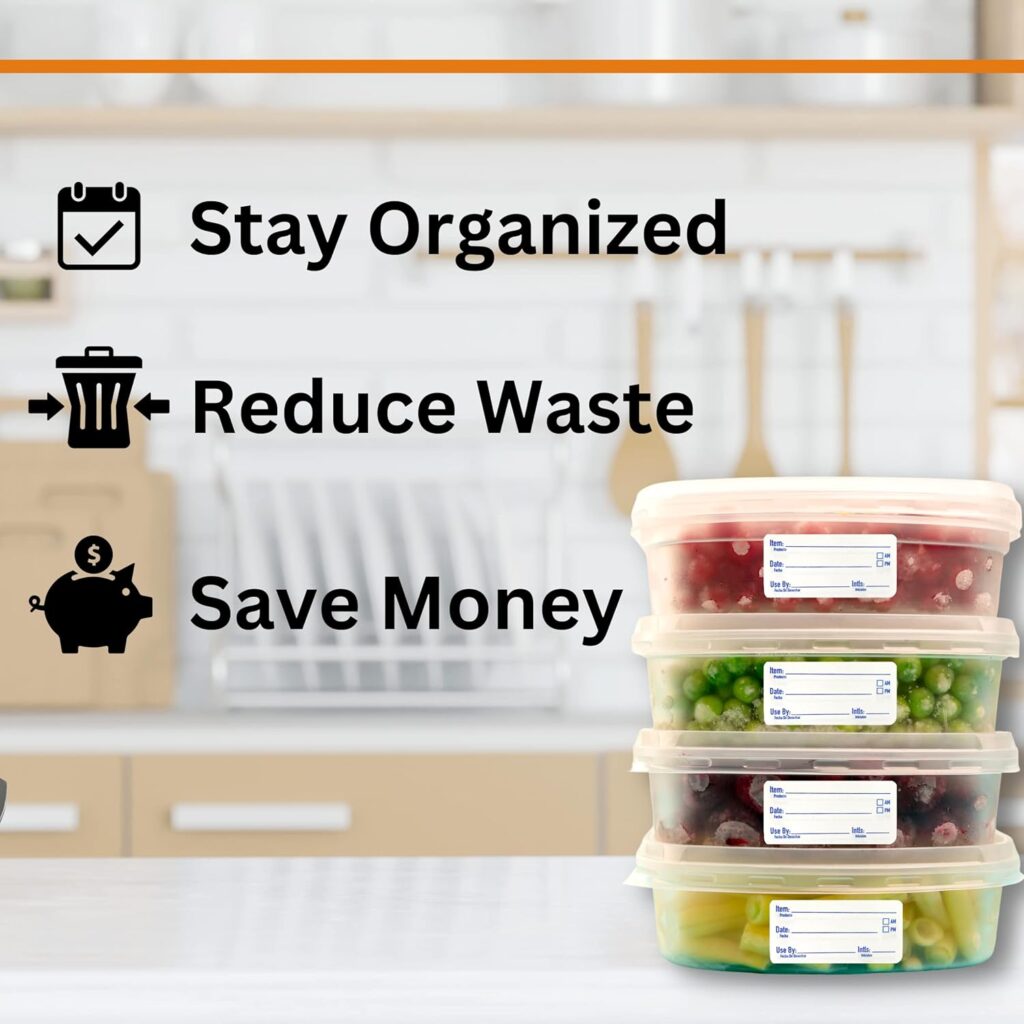
The key is making labeling a habit. When you put leftovers away, grab a label, write the date and contents, and stick it on. Takes 5 seconds. When that container goes in the dishwasher, the label disappears, and you start fresh next time.
2. Create Strategic Zones Based on Temperature
Not all areas of your fridge are created equal. Different spots have different temperatures, and knowing where to store what can dramatically extend food life and reduce waste.
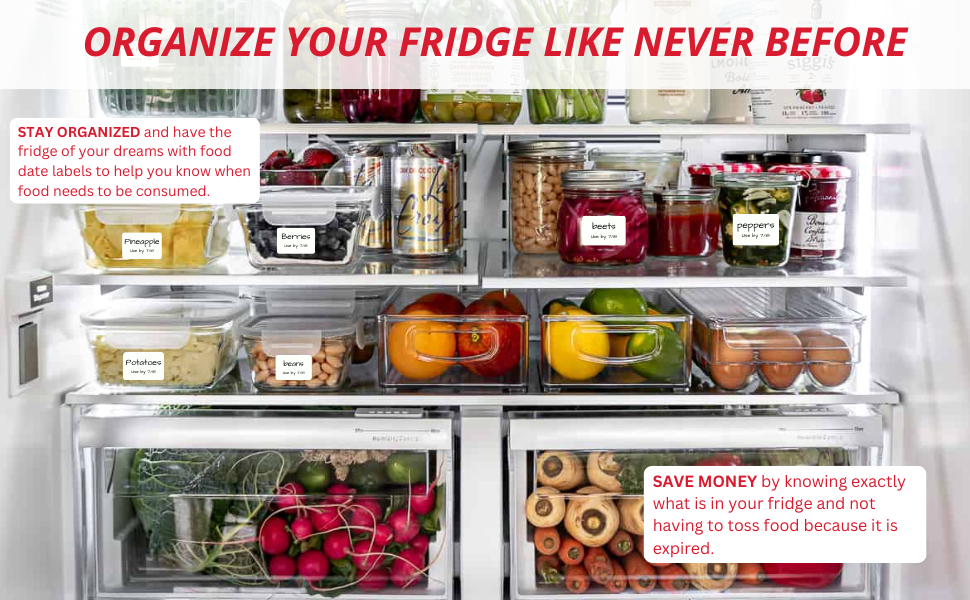
Upper shelves (warmest part): This is the best place for foods that don’t need the coldest temperatures. Store drinks, leftovers, and ready-to-eat foods here. These items should be at eye level so you see them first and remember to eat them.
Middle shelves: Keep dairy products like milk, yogurt, cheese, and butter on these shelves. The consistent temperature here is perfect for dairy. Also store eggs here, not in the door.
Lower shelves (coldest part): This is where raw meat, poultry, and fish should live. The colder temperature keeps them safer, and storing them on the bottom prevents any drips from contaminating other foods. Always keep these items in sealed containers or on a tray.
Door shelves (warmest spot): Despite being the most convenient, the door is actually the warmest part of your fridge because it’s exposed to room temperature every time you open it. Only store stable items here like condiments, hot sauce, soy sauce, and salad dressings. Never store milk, eggs, or anything perishable in the door.
Crisper drawers: These are designed to maintain higher humidity. Use one drawer exclusively for vegetables and one for fruits. Don’t mix them—fruits release ethylene gas that can make vegetables spoil faster. Adjust the humidity settings if your drawers have them: high humidity for vegetables, low humidity for fruits.
When everything has its designated zone, you can see what you have at a glance. And when you can see it, you’re much more likely to use it before it goes bad. Make sure to label items in each zone with dates so you know what needs to be eaten first.
3. Use the “First In, First Out” Method
Restaurants use this method to minimize food waste, and it works just as well at home. FIFO (First In, First Out) means you always use older items before newer ones.
How to implement FIFO in your fridge:
When you bring groceries home, move older items to the front and put new items behind them. This forces you to grab the older items first when cooking or making meals.
Date everything when you bring it home or when you open it. This is where having a good labeling system is essential. Without dates, you’re just guessing at what’s oldest.
Create a “use first” shelf or designated area. Put items that need to be eaten soon all in one spot. Check this area first when deciding what to make for meals.
Do a weekly fridge check. Every Sunday (or whatever day works for you), spend 5 minutes reviewing what’s in your fridge. Check dates, move items that are getting close to expiring to your “use first” zone, and plan meals around what needs to be eaten.
FIFO only works if you can actually see what you have and know when things were made. That’s why clear containers and date labeling are so important. When I open my fridge, I can instantly see my color-coded labels and know that blue labels (Monday) need to be eaten before green labels (Tuesday), and so on.
4. Store Food in Clear Containers
Out of sight, out of mind. When leftovers are stored in opaque containers or aluminum foil, you forget they exist. They get pushed to the back of the fridge and discovered weeks later as science experiments.
The solution? Use clear containers for everything.
Why clear containers reduce waste:
You can see exactly what’s inside without opening it. This saves time and ensures nothing gets forgotten.
They stack efficiently, maximizing fridge space and keeping things organized. When your fridge isn’t overcrowded, it’s easier to see what you have.
Clear containers make doing a fridge inventory quick and easy. You can scan your fridge in seconds and know exactly what needs to be used.
Pro tips for container organization:
Invest in a few good stackable, airtight containers in various sizes. You don’t need matching everything, but having containers that work well together makes organizing easier.
Label the containers, not just the lids. Lids get mixed up, but if the container itself is labeled with dissolvable labels, you’ll always know what it is. Plus, you can see the label through the clear container without opening it.
Use square or rectangular containers instead of round. They use space more efficiently and are easier to stack.
Store leftovers in portion-sized containers. This makes it easier to grab lunch or reheat a single serving, increasing the likelihood that leftovers actually get eaten.
5. Prep and Organize Produce Immediately
One of the biggest sources of fridge waste is produce that goes bad before you use it. The problem? Most people just toss produce in the crisper drawer still in the grocery store bags and forget about it.
Here’s a better approach:
When you get home from the grocery store:
Wash and prep vegetables right away. Wash lettuce, chop vegetables, and store them in clear containers. When produce is ready to use, you’re much more likely to actually use it.
Remove produce from plastic bags. Those grocery store bags trap moisture and make produce rot faster. Use produce storage containers with proper ventilation, or wrap in paper towels and store in containers.
Store herbs like fresh flowers. Cut the stems and place herbs in a jar with an inch of water. Cover loosely with a plastic bag and refrigerate. They’ll last 2-3 weeks instead of a few days.
Don’t wash berries until you’re ready to eat them. Moisture causes berries to mold quickly. Keep them in their original container, wash right before eating.
Keep ethylene-producing fruits separate. Apples, bananas, and avocados release ethylene gas that causes other produce to ripen faster. Store them away from vegetables and other fruits.
The key is making produce visible and accessible. If you have to hunt for vegetables or wash and chop them every time you want to use them, you’re less likely to use them. Do the work once when you get home, and eating healthy becomes much easier throughout the week.
Putting It All Together
Let’s review how these five strategies work together to reduce fridge waste:
You label everything with dates using dissolvable labels, so you always know what you have and when to use it. You organize your fridge into temperature zones, storing items in the spots that keep them freshest longest. You implement FIFO, always using older items before newer ones. You use clear containers so nothing gets forgotten in the back. And you prep produce immediately so it’s ready to use and more likely to get eaten.
The result? A fridge that’s organized, efficient, and wastes far less food.
Most families who implement these strategies report saving $30-50 per month on groceries—that’s $360-600 per year—simply from wasting less food. Plus, you’ll save time because you can see what you have at a glance and meal planning becomes much easier.
The foundation of all these strategies is proper labeling. When you can quickly see what’s in your fridge and how old it is, everything else falls into place. That’s why starting with a good labeling system is so important.
If you’re ready to stop throwing money away and get your fridge organized, start with dissolvable food labels here. They’re affordable, eco-friendly, and they completely solve the sticky residue problem that makes people avoid labeling in the first place.
Your organized fridge—and your bank account—will thank you!