
Why You Shouldn’t Use Camphor Balls + 5 Safe Alternatives
For generations, camphor balls have been treated as a “natural” and safer alternative to traditional chemical mothballs.
Derived originally from the camphor tree, they carry a sharp, aromatic scent that many associate with clean, protected closets.
However, just because something sounds natural doesn’t mean it belongs in your living space.
Modern science has shown that camphor balls pose significant health risks, especially when trapped inside closed wardrobes.
Fortunately, you can fully protect your woolens and fabrics without introducing hidden hazards into your home.
In this post, we will explore why you shouldn’t use camphor balls and 5 safer alternatives.
Let’s dive in!
Why You Shouldn’t Use Camphor Balls
Camphor works exactly like a pesticide: it sublimates, meaning it slowly transforms from a solid ball into a concentrated gas.
When you fill a closet with camphor, you are filling an enclosed space with airborne chemicals.
The primary reasons to remove camphor balls from your home include:
- High Toxicity to Children and Pets: Camphor is incredibly fast-acting and toxic if ingested. Even a small fraction of a camphor ball swallowed by a curious toddler or a pet can cause rapid-onset vomiting, severe confusion, and dangerous seizures within minutes.
- Respiratory Irritation: Inhaling concentrated camphor fumes can irritate the delicate lining of your nose, throat, and lungs. For anyone dealing with asthma, allergies, or respiratory sensitivities, it can easily trigger wheezing and chronic coughing.
- Neurological and Systemic Risks: Prolonged exposure to camphor gas in poorly ventilated rooms can cause subtle, ongoing symptoms like chronic headaches, nausea, dizziness, and mental confusion. Over time, it can even impact liver and kidney function.
- A False Sense of Safety: Because it has been used in traditional practices for centuries, many people assume it is completely benign. This leads to overusing the product and scattering loose balls in drawers where they easily contaminate clothing.
5 Safe and Natural Alternatives to Camphor Balls
You don’t have to surrender your favorite sweaters to the pests to keep your family safe. You can easily protect your closet using a combination of natural botanicals and smart physical barriers.
1. Cedar and Lavender Sachets
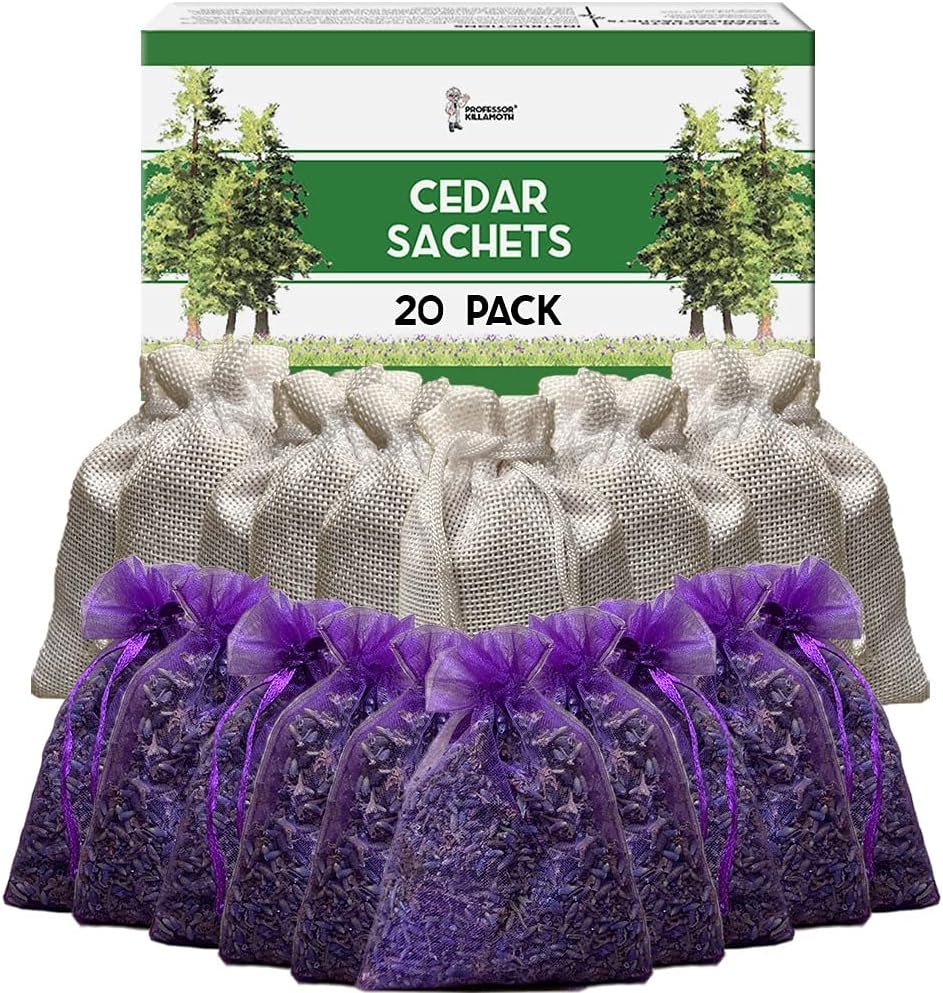
The absolute best natural replacement for traditional chemical repellents is a combination of Cedar and Lavender Sachets.
Clothes moths have a highly sensitive sense of smell, and the natural aromatic oils found in red cedar wood and dried lavender flowers act as powerful deterrents.
The volatile oils in cedar physically disrupt the behavior of young moth larvae, preventing them from feeding on your fabrics, while lavender safely repels adult moths looking for a place to lay eggs.
Simply tuck these natural sachets into your dresser drawers or hang them on your closet racks for a fresh, clean scent that keeps pests at bay without a drop of pesticide.
Out of all of the sachets I’ve tried, I love these cedar and lavender sachets.
Unlike these toxic pesticides, which can cause respiratory irritation and neurological risks, these sachets rely entirely on the natural aromatic power of pure lavender to safely repel adult moths.
They keep your closets, drawers, and seasonal storage completely pest-free while infusing your fabrics with a beautifully fresh, soothing botanical scent instead of a stubborn chemical odor.
Simply add them in your closets and drawers, and you’re good to go!
2. Clothes Moth Traps
If you suspect you already have an active infestation, you need to stop the breeding cycle immediately.
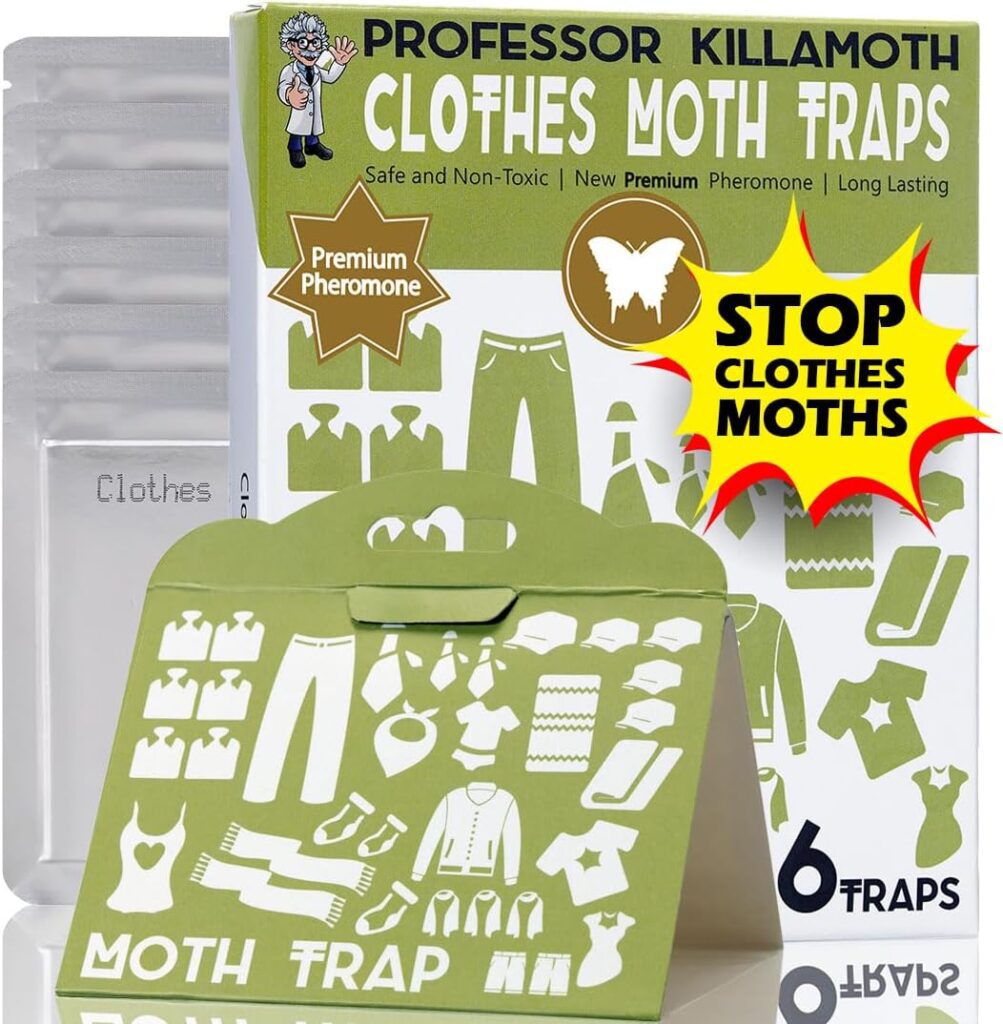
Clothes Moth Traps are a highly effective, completely non-toxic solution.
These traps utilize a natural female moth pheromone embedded on a sticky strip inside a small cardboard tent.
Male moths are irresistibly drawn to the scent, fly inside, and become securely trapped, immediately halting their ability to reproduce.
Placing a few of these discreet pheromone traps on your closet shelves allows you to safely monitor and eliminate the population without releasing harmful gases into your bedroom air.
Out of all of the moth traps I’ve used, these are my favorite because of their simplicity and ease of use.
While traditional mothballs and camphor balls present a severe poisoning hazard to curious toddlers and pets, our traps are completely safe to use anywhere in your home.
They utilize an advanced, natural female pheromone to attract and securely trap male moths, instantly disrupting their breeding cycle.
This gives you a highly effective way to monitor and stop active infestations before they damage your expensive clothing, all without releasing harmful pesticides into your bedroom air.
Simply set one up and you’re good to go!
3. Wash and Dry-Clean Before Storing
Moth larvae don’t actually eat wool for the fabric itself; they are hunting for microscopic traces of human sweat, skin flakes, hair, and food particles trapped within the fibers. Before packing your winter clothes away for the season, launder or dry-clean every single piece. High heat during a wash cycle or the professional dry-cleaning process kills any invisible moth eggs or tiny larvae lurking in the seams, completely removing the invitation for pests to feast.
4. Utilize Vacuum Storage Bags
Moths cannot chew through plastic, and their larvae require oxygen to survive. The most effective physical barrier you can use is an airtight, vacuum-sealed storage bag. After thoroughly cleaning your clothing, place the items inside the bag and use a vacuum hose to seal out all the air. This not only saves an immense amount of closet space but completely seals your fabrics away from adult moths looking for a dark, quiet place to nest.
5. Vacuum and Air Out Your Closets
Clothes moths thrive in dark, undisturbed, and dusty corners. To make your home uninviting to them, practice regular closet maintenance. Once or twice a year, pull your clothes out, shake them vigorously, and thoroughly vacuum the baseboards, carpet edges, and dark shelves of your wardrobe. The physical vibration and exposure to bright sunlight instantly disrupt active moths, and vacuuming removes the dust, hair, and fibers that hidden larvae use to construct their cocoons.
Protecting your precious wardrobe from pest damage doesn’t require filling your home with dangerous fumes. By switching to botanical deterrents like cedar and lavender, and deploying non-toxic pheromone traps, you can maintain a beautifully fresh, safe, and entirely moth-free closet.
Thank you for reading, and here is to a healthy, naturally protected home!
Affiliate Disclosure
Some of the links on this site are affiliate links. This means that if you click on the link and purchase the item, we may receive an affiliate commission at no extra cost to you. I only recommend products or services that I believe will add value to my readers, however some (not all) do pay us to be on this blog. Your support and theirs helps keep this blog running, and I genuinely appreciate it.
Medical Disclaimer
The information provided on this website is for educational purposes only and is not intended as medical advice. This blog or the writer is not a licensed healthcare professional, and the content should not be used as a substitute for professional medical diagnosis, treatment, or advice. Always consult with your physician or other qualified healthcare provider before starting any new treatment or making any changes to your healthcare routine.